
Equality Ambassadors Online Lesson Plan
Are you ready to test your knowledge?
If your answer is YES, then take this quiz!
Be sure to check your answers after you press submit!
Module 1: Understanding of democracy and use of creative
processes and new digital technologies to promote same
Question: How can theatre make important contribution
to understanding democracy processes?
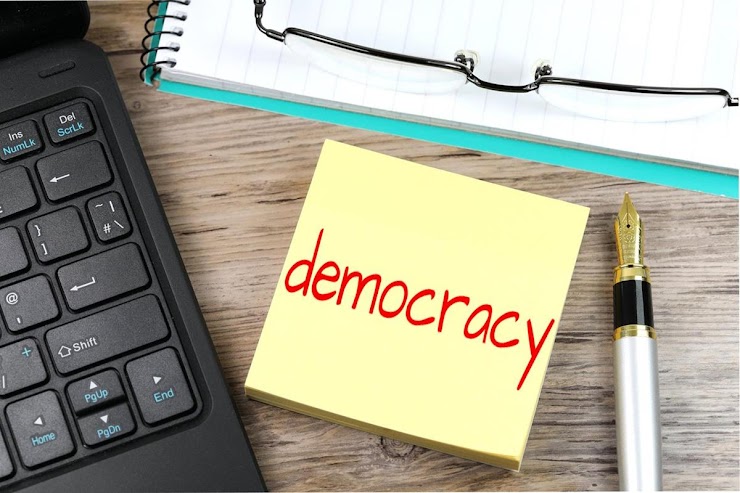
Democracy by Nick Youngson CC BY-SA 3.0 Alpha Stock Images
In fact, Theatre and art in general can make important contribution to understanding democracy processes, by changing conflict attitudes or injustice, xenophobia, nationalism... at three related levels: personal, emotional and societal. This is to say that theatre can (1) provide a forum through which individuals can come to terms with their personal experiences of conflict and become more attuned to understanding and appreciating the other; (2) facilitate ways in which individuals and groups can come to terms with the deep emotional wounds inflicted by conflict; and (3) make the surrounding societal discourses more attuned to accommodating parties that were once in conflict, thus creating more inclusive and pluralist historical narratives.
We identify three key elements in this transformation process: encouraging expression, transcending stereotypes, and initiating dialogue. The first step in this transformation process is the need to express experiences with conflict - whether they be first-hand or learned through others in the community. Theatre embraces this idea by offering a public forum that gives people the chance to voice their feelings. Doing so allows individuals who experienced conflict a chance to come to terms with past events and perhaps even heal some of the related trauma.
The ability of theatre to encourage different forms of communication - including non-verbal ones - is central. This could be done also through music, dance, and other activities. The second component in the individual transformation process relates to how theatre manages to create a distance between a fictional performance and the reality experienced by the performer or spectator in the real world. Theatre provides the opportunity to take part in conflict narratives outside the risks of real life. The performance is a safe space - a space that enables individuals trapped in conflict to express themselves in a manner they could not do otherwise. The notion of playing a fictional role, rather than living real life, challenges preconceived perceptions and makes room for multiple voices and views to be heard. Through forms of theatre, individuals can take on roles that might often be denied to them in real life, thus giving them the chance to explore new ways of knowing the conflict and expressing its grievances.
There is a third and directly related element in how theatre transforms personal narratives: it improves communication and
understanding between groups in conflict. Performing for each other or performing the "other side" is opening space for understanding and dialogue.
Beyond doubt, ‘learning democracy’ is the process that needs to evolve in a real social context, through meaningful interactions resulting in real outcomes
that concern the lives of the learners. The changes that happen as a result of actions, however, should be felt also in the structures and routines of the societies,
and not only in those of citizens.
Society is constantly being changed by technology, and rather than fearing these often dramatic changes, the focus should be on understanding the underlying mechanisms that are responsible for them.
Watch the video below for more insight!
Why theater is essential to democracy | Oskar Eustis
Module 02: Understanding of equality and use of creative processes and new digital technologies to promote same
Question: What is equality for the narrator?
Watch the video below and then answer the question.
A few definitions:
Equality: Equality is about social and political equality for everyone in society, with everyone being valued equally. Everyone shall have fairness, equal opportunity and justice and shall not be discriminated against because of their race, ethnic origin, religion, political belief, disability, sexual orientation, age or gender.
Gender Equality: Gender equality is achieved when women and men enjoy the same rights and opportunities across all sectors of society, including economic participation and decision-making, and when the different behaviours, aspirations and needs of women and men are equally valued and favoured. www.genderequality.ie
Gender Equality states "that all human beings are free to develop their personal abilities and make choices without the limitations set by strict gender roles; that the different behaviour, aspirations and needs of women and men are equally considered, valued and favoured". Implementing gender equality fully requires equal representation and participation of both men and women in the economy, decision-making, as well as in social, cultural and civil life. Only in this way will men and women reach their full potential in society. It implies a fair distribution of resources between men and women, the redistribution of power and caring responsibilities, and freedom from gender-based violence.
Human Rights: The idea of ‘human rights’ implies that a person has a set of rights because she or he is a human being. While someone may have extra rights because he or she is a citizen of a particular country (the right to vote in that country, for instance) human rights apply to everyone irrespective of their country. Human rights are basic rights and freedoms that belong to every person in the world and are based on core principles of fairness, respect for human dignity, tolerance, equality, autonomy and the belief that everybody should be treated equally and with dignity - no matter what their circumstances. Equality and Human rights apply to everyone equally - men, women, older people, children, young adults, minority ethnic people, people with disabilities, migrants, members of the travelling community, gay, lesbian and transgender people, etc.
Module 03: Understanding of human rights, active citizenship and social inclusion and use of creative processes and new digital technologies to promote same
Question: Out of the definitions below, which one defines social inclusion?

Photo by Nathan Dumlao on Unsplash
In truth, all of the other answers are definitions of social inclusion.
Module 04: Knowledge of role of local and national governments and the EU in promoting democracy, equality and human rights
Question: What can local and national governments and the EU do for the promotion of democracy, equality and human rights?
Photo by Nathan Dumlao on Unsplash
In fact, the European Commission and the High Representative set out the priorities and way ahead on Human rights and Democracy, adopting a Joint Communication and the EU Action Plan on Human Rights and Democracy for 2020-2024. Further, they put forward a joint proposal to the Council to act by qualified majority voting on issues falling under the Action Plan, reflecting the strategic importance of the Action Plan. It aims at fostering faster and more efficient decision-making on human rights and democracy.
Changing geopolitics, transition to the digital age, environmental degradation and climate change pose important challenges, but they are also opportunities to foster positive transformation towards more democratic and inclusive societies. Today's proposal sets out steps for the EU and its Member States to embrace new realities and act together in line with the EU's founding values.
High Representative/Vice-President, Josep Borrell, said: "Crisis situations, as the one we are living with the Coronavirus' pandemic, pose particular challenges to the effective exercise and protection of human rights, and put the functioning of our democracies to the test. This is an opportunity for Europe to stand up for its values and interests. We need the courage and ambition to tackle challenges together. Today, we propose an ambitious plan to defend human rights and democracy all over the world by using all our resources faster and more effectively".
Building on the achievements of the previous Action Plans, the new Action Plan identifies the priorities and key actions for the next five years and commits to ensure that the EU plays a greater role in promoting and defending human rights and democracy throughout its external action. The Action Plan has five lines of action:
- Protecting and empowering individuals;
- Building resilient, inclusive and democratic societies;
- Promoting a global system for Human Rights and Democracy;
- Harnessing opportunities and addressing challenges posed by the use of new technologies;
- Delivering by working together.
These five lines of action will serve as the basis for operational measures to be implemented at country, regional and multilateral level, taking into account local circumstances and specificities. To do this, the EU will use the broad range of policies and tools at its disposal to promote and defend human rights, democracy and the rule of law.
Click on the link for more info: https://ec.europa.eu/commission/presscorner/detail/en/ip_20_492
Module 05: Communication Skills - public speaking, listening and ability to pass on information to other young people regarding democracy, equality and human rights
Question: Communication skills are important because:
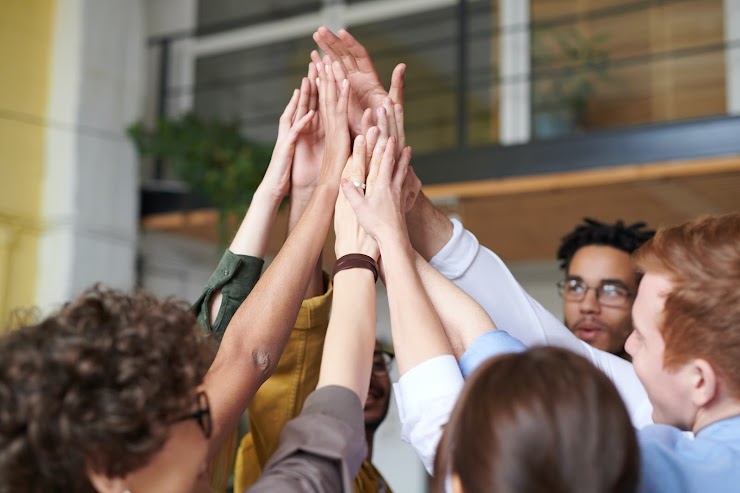
Photo by Nathan Dumlao on Unsplash
Here are some takeaway points from this module:
Key point 1: Communication is one of the Being able to communicate effectively is one of the most important of all life skills.
Key point 2: The ability to communicate information accurately, clearly and as intended, is a vital life skill.
Key point 3: Like actors on stage, in our daily life, communication is both vocal and non-verbal, using body language.
Key point 4: How well information can be transmitted and received is a measure of how good our communication skills are.
Key point 5: Communication skills can be learned or improved through theatre techniques.
Key point 6: Learning acting techniques and developing your communication skills can help all aspects of your life.
Module 06: Understanding Leadership Skills
Question: Which is the style of leadership where the leader, although he/she does make the final decisions, involves more the group in the decision making process?
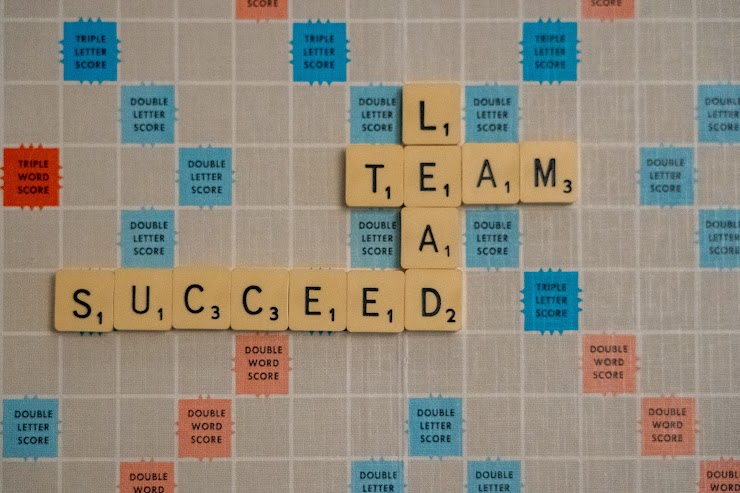
Photo by Nathan Dumlao on Unsplash
In fact, here is some more info on these types of leadership:
Authoritarian leadership
An authoritarian leader has all the power and makes all the decision-making in himself.
They give commands, tasks and responsibilities, as they please, without asking the group
for their opinions. Does not listen to what the people have to say and maintains full authority.
Passive (Laissez-faire) leadership
In passive leadership, leaders tend to avoid responsibilities. They give responsibility for
the decision making to members of the groups and do not really take administrative initiatives.
They do not give clear directions, rather than let the group figure out themselves what needs to
be done and deal with the issues.
Democratic/participative leadership
In democratic or participative leadership the leader still makes the final decisions,
but involves more the group in the decision making process. The leader listens to everyone’s
opinion and takes it into account. It can be very motivating for the team, but, if there are any
disagreements, it can also mean that it will take longer time to reach a consensus.
If you want to know more about leadership styles, you can check this link: https://www.verywellmind.com/leadership-styles-2795312

Photo by Jill Wellington: https://www.pexels.com/el-gr/photo/40815/
You did it! You finished this quiz!
We hope you have enjoyed it!
Module 1: Understanding of democracy and use of creative
processes and new digital technologies to promote same
Question: How can theatre make important contribution
to understanding democracy processes?
Democracy by Nick Youngson CC BY-SA 3.0 Alpha Stock Images
In fact, Theatre and art in general can make important contribution to understanding democracy processes, by changing conflict attitudes or injustice, xenophobia, nationalism... at three related levels: personal, emotional and societal. This is to say that theatre can (1) provide a forum through which individuals can come to terms with their personal experiences of conflict and become more attuned to understanding and appreciating the other; (2) facilitate ways in which individuals and groups can come to terms with the deep emotional wounds inflicted by conflict; and (3) make the surrounding societal discourses more attuned to accommodating parties that were once in conflict, thus creating more inclusive and pluralist historical narratives.
We identify three key elements in this transformation process: encouraging expression, transcending stereotypes, and initiating dialogue. The first step in this transformation process is the need to express experiences with conflict - whether they be first-hand or learned through others in the community. Theatre embraces this idea by offering a public forum that gives people the chance to voice their feelings. Doing so allows individuals who experienced conflict a chance to come to terms with past events and perhaps even heal some of the related trauma.
The ability of theatre to encourage different forms of communication - including non-verbal ones - is central. This could be done also through music, dance, and other activities. The second component in the individual transformation process relates to how theatre manages to create a distance between a fictional performance and the reality experienced by the performer or spectator in the real world. Theatre provides the opportunity to take part in conflict narratives outside the risks of real life. The performance is a safe space - a space that enables individuals trapped in conflict to express themselves in a manner they could not do otherwise. The notion of playing a fictional role, rather than living real life, challenges preconceived perceptions and makes room for multiple voices and views to be heard. Through forms of theatre, individuals can take on roles that might often be denied to them in real life, thus giving them the chance to explore new ways of knowing the conflict and expressing its grievances.
There is a third and directly related element in how theatre transforms personal narratives: it improves communication and
understanding between groups in conflict. Performing for each other or performing the "other side" is opening space for understanding and dialogue.
Beyond doubt, ‘learning democracy’ is the process that needs to evolve in a real social context, through meaningful interactions resulting in real outcomes
that concern the lives of the learners. The changes that happen as a result of actions, however, should be felt also in the structures and routines of the societies,
and not only in those of citizens.
Society is constantly being changed by technology, and rather than fearing these often dramatic changes, the focus should be on understanding the underlying mechanisms that are responsible for them.
Watch the video below for more insight!
Why theater is essential to democracy | Oskar Eustis
Module 02: Understanding of equality and use of creative processes and new digital technologies to promote same
Question: What is equality for the narrator?
Watch the video below and then answer the question.
A few definitions:
Equality: Equality is about social and political equality for everyone in society, with everyone being valued equally. Everyone shall have fairness, equal opportunity and justice and shall not be discriminated against because of their race, ethnic origin, religion, political belief, disability, sexual orientation, age or gender.
Gender Equality: Gender equality is achieved when women and men enjoy the same rights and opportunities across all sectors of society, including economic participation and decision-making, and when the different behaviours, aspirations and needs of women and men are equally valued and favoured. www.genderequality.ie
Gender Equality states "that all human beings are free to develop their personal abilities and make choices without the limitations set by strict gender roles; that the different behaviour, aspirations and needs of women and men are equally considered, valued and favoured". Implementing gender equality fully requires equal representation and participation of both men and women in the economy, decision-making, as well as in social, cultural and civil life. Only in this way will men and women reach their full potential in society. It implies a fair distribution of resources between men and women, the redistribution of power and caring responsibilities, and freedom from gender-based violence.
Human Rights: The idea of ‘human rights’ implies that a person has a set of rights because she or he is a human being. While someone may have extra rights because he or she is a citizen of a particular country (the right to vote in that country, for instance) human rights apply to everyone irrespective of their country. Human rights are basic rights and freedoms that belong to every person in the world and are based on core principles of fairness, respect for human dignity, tolerance, equality, autonomy and the belief that everybody should be treated equally and with dignity - no matter what their circumstances. Equality and Human rights apply to everyone equally - men, women, older people, children, young adults, minority ethnic people, people with disabilities, migrants, members of the travelling community, gay, lesbian and transgender people, etc.
Module 03: Understanding of human rights, active citizenship and social inclusion and use of creative processes and new digital technologies to promote same
Question: Out of the definitions below, which one defines social inclusion?
Photo by Nathan Dumlao on Unsplash
In truth, all of the other answers are definitions of social inclusion.
Module 04: Knowledge of role of local and national governments and the EU in promoting democracy, equality and human rights
Question: What can local and national governments and the EU do for the promotion of democracy, equality and human rights?
Photo by Nathan Dumlao on Unsplash
In fact, the European Commission and the High Representative set out the priorities and way ahead on Human rights and Democracy, adopting a Joint Communication and the EU Action Plan on Human Rights and Democracy for 2020-2024. Further, they put forward a joint proposal to the Council to act by qualified majority voting on issues falling under the Action Plan, reflecting the strategic importance of the Action Plan. It aims at fostering faster and more efficient decision-making on human rights and democracy.
Changing geopolitics, transition to the digital age, environmental degradation and climate change pose important challenges, but they are also opportunities to foster positive transformation towards more democratic and inclusive societies. Today's proposal sets out steps for the EU and its Member States to embrace new realities and act together in line with the EU's founding values.
High Representative/Vice-President, Josep Borrell, said: "Crisis situations, as the one we are living with the Coronavirus' pandemic, pose particular challenges to the effective exercise and protection of human rights, and put the functioning of our democracies to the test. This is an opportunity for Europe to stand up for its values and interests. We need the courage and ambition to tackle challenges together. Today, we propose an ambitious plan to defend human rights and democracy all over the world by using all our resources faster and more effectively".
Building on the achievements of the previous Action Plans, the new Action Plan identifies the priorities and key actions for the next five years and commits to ensure that the EU plays a greater role in promoting and defending human rights and democracy throughout its external action. The Action Plan has five lines of action:
- Protecting and empowering individuals;
- Building resilient, inclusive and democratic societies;
- Promoting a global system for Human Rights and Democracy;
- Harnessing opportunities and addressing challenges posed by the use of new technologies;
- Delivering by working together.
These five lines of action will serve as the basis for operational measures to be implemented at country, regional and multilateral level, taking into account local circumstances and specificities. To do this, the EU will use the broad range of policies and tools at its disposal to promote and defend human rights, democracy and the rule of law.
Click on the link for more info: https://ec.europa.eu/commission/presscorner/detail/en/ip_20_492
Module 05: Communication Skills - public speaking, listening and ability to pass on information to other young people regarding democracy, equality and human rights
Question: Communication skills are important because:
Photo by Nathan Dumlao on Unsplash
Here are some takeaway points from this module:
Key point 1: Communication is one of the Being able to communicate effectively is one of the most important of all life skills.
Key point 2: The ability to communicate information accurately, clearly and as intended, is a vital life skill.
Key point 3: Like actors on stage, in our daily life, communication is both vocal and non-verbal, using body language.
Key point 4: How well information can be transmitted and received is a measure of how good our communication skills are.
Key point 5: Communication skills can be learned or improved through theatre techniques.
Key point 6: Learning acting techniques and developing your communication skills can help all aspects of your life.
Module 06: Understanding Leadership Skills
Question: Which is the style of leadership where the leader, although he/she does make the final decisions, involves more the group in the decision making process?
Photo by Nathan Dumlao on Unsplash
In fact, here is some more info on these types of leadership:
Authoritarian leadership
An authoritarian leader has all the power and makes all the decision-making in himself.
They give commands, tasks and responsibilities, as they please, without asking the group
for their opinions. Does not listen to what the people have to say and maintains full authority.
Passive (Laissez-faire) leadership
In passive leadership, leaders tend to avoid responsibilities. They give responsibility for
the decision making to members of the groups and do not really take administrative initiatives.
They do not give clear directions, rather than let the group figure out themselves what needs to
be done and deal with the issues.
Democratic/participative leadership
In democratic or participative leadership the leader still makes the final decisions,
but involves more the group in the decision making process. The leader listens to everyone’s
opinion and takes it into account. It can be very motivating for the team, but, if there are any
disagreements, it can also mean that it will take longer time to reach a consensus.
If you want to know more about leadership styles, you can check this link: https://www.verywellmind.com/leadership-styles-2795312